27. Lavenham – anyone for a perpendicular?

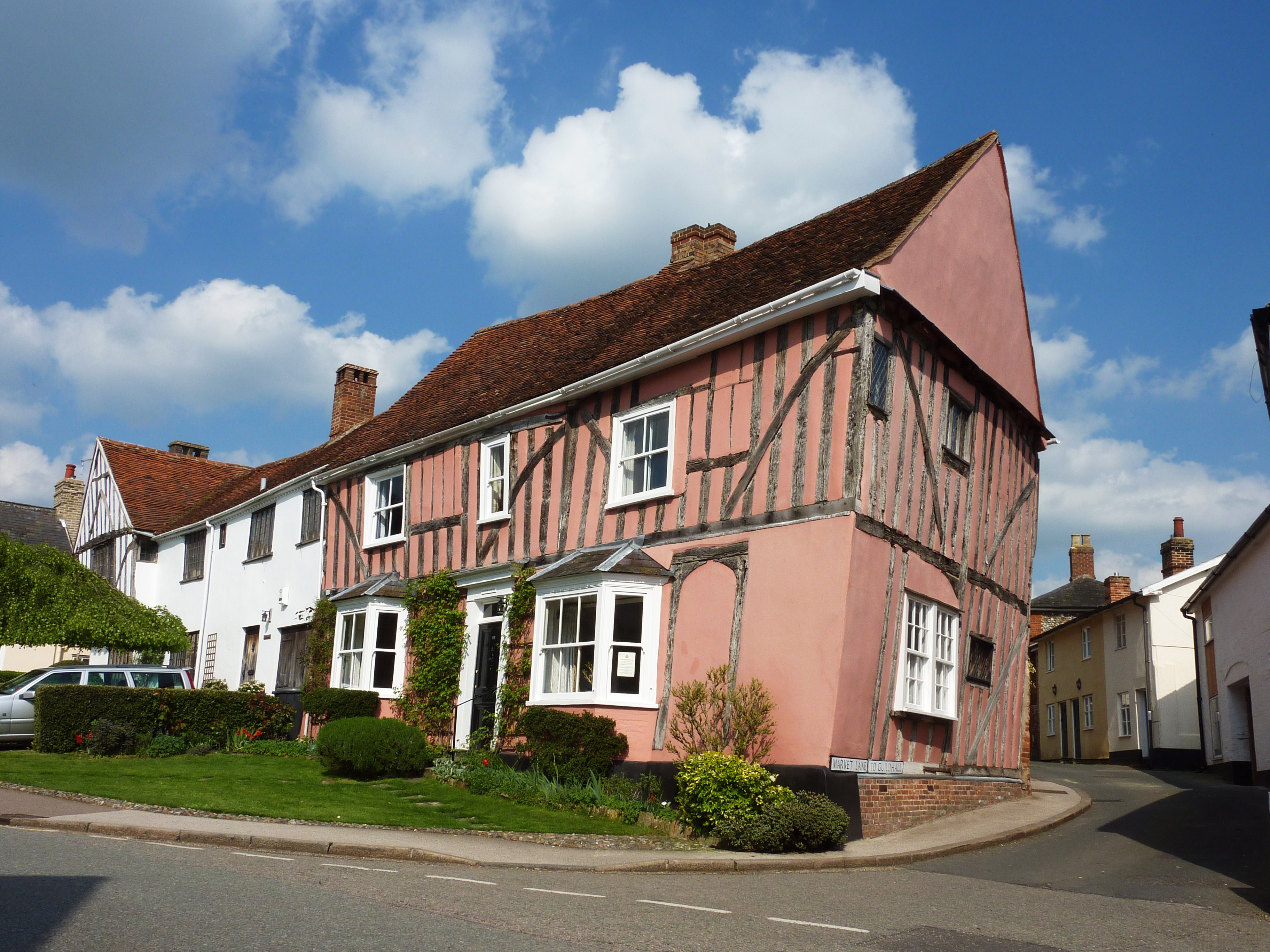
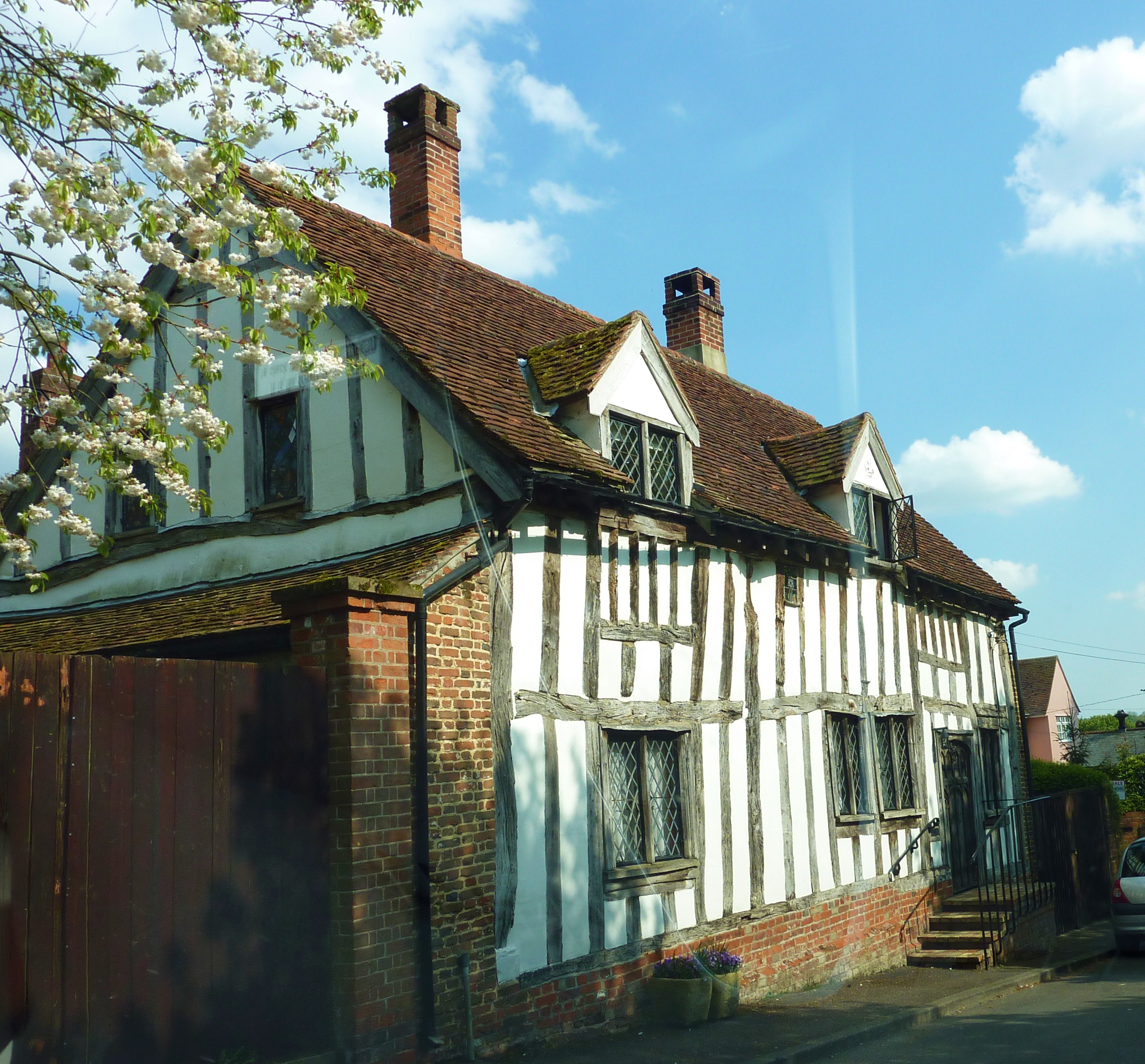
Interesting geometry in Lavenham (and some reflection off my windscreen….oops!)

I almost didn’t make it to Lavenham. At some stage of the day, probably when I was having lunch, I realized that heading back into London in the afternoon would be a disaster as I’d catch all the peak hour traffic on my side of town. I made what I thought was a brilliant decision to delay heading back so that I’d reach the outskirts of London about 6.30 or 7pm and miss the worst of the traffic. This left me with time to visit Lavenham, a truly marvellous old town that lives up to its reputation as a must see destination.

Lavenham is full of half-timbered houses.

Must have been rubbish collection day!

Anyone for a perpendicular?

It’s a  beautiful and ancient town with houses that have to be seen to be believed – again, much photography of uneven walls, half-timbered houses at scary angles to the perpendicular and quaint tea-houses – all in a great variety of colours. I had afternoon tea in a gorgeous place that seemed to take you back in time. While I waited for my refreshments to come I scribbled off a few postcards to anyone whose address I could remember all the while extolling the virtues of the magnificent old place.

A delightful block of houses – except for the ubiquitous blue bins!

Whoa! Who says houses have to be upright?

It’s easy to imagine yourself coming out of the local pub and starting to wonder just how many drinks you DID have that night!

Lavenham , a wool town, reached its peak in the 15th century and now has a reputation as England’s finest medieval village. At first I was averse to seeing so many houses painted pink, peach, yellow or orange ( am still  a little, to be honest) till I learned about ’Suffolk Pink’ which is a traditional paint made by blending red ochre with whitewash. The latter is a mixture of water, lime and chalk and is a cost-effective way to dress up a wall.

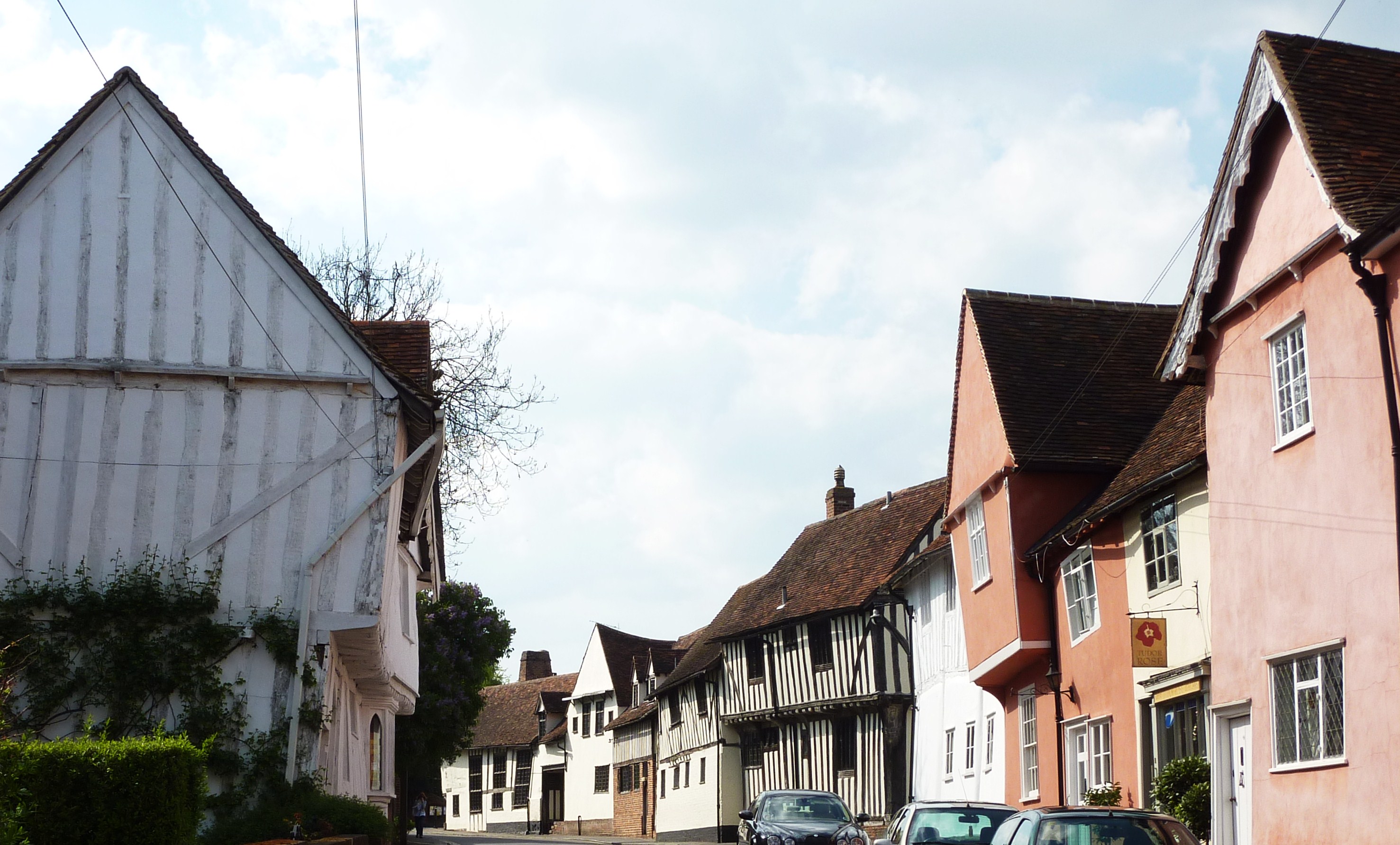
I get a headache if I look at this photo for too long!

The Pink House, Lavenham

Interesting angles, Lavenham, Suffolk

The Pink House is particularly spectacular with its refusal to conform to the perpendicular and my photo of it is especially tilted by the wide angle I used for the photograph.

Click here to visit a site that has a wonderful photo of a crooked house in the centre of town and an interesting article describing how odd it feels to walk inside such a building. Here’s a quote from the article by Anna Busonera.                                                                                                                                     ‘From the outside the building is crooked, but once inside the house, visitors realize the indoors are also crooked; the walls, the windows, as well as the floors. It is really difficult to walk from one room to the next, without holding on to something; some people have experienced nausea when inside the house.’

Lavenham Airfield played a significant role in World War Two with the men of the 487th Bomb Group (Heavy) of the US Air Force stationed there. Most of the area is being slowly reclaimed by nature and is now a farm so it must cheer those who were based there to see that the Control Tower is being restored and kept as a memorial.
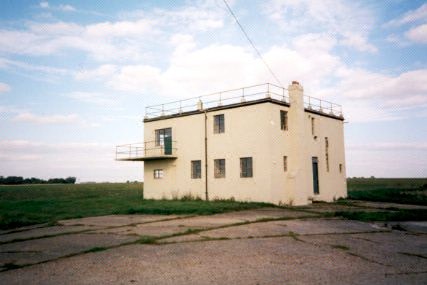
Old control tower at Lavenham Airfield

This photo of the old Control Tower is taken from a page created by the Lavenham Community Council and can be accessed by clicking here or on the link in the final paragraph below.

The Church of St Peter and St Paul, Lavenham, Suffolk, England

I’ve had to lighten this photo of the church a lot because the sun wouldn’t be obliging and shine from behind me while the took the photo! Hence the colours are a bit artificial. Check out the link in the final paragraph for a great shot of the church – methinks it’s been cleaned since I was there!

The wealth of the town is demonstrated by the sheer size and decoration of the church of St Peter & St Paul as it is unusually large compared to the size of the village. It was completed in 1530. The church tower was a godsend to American airmen, its 141 ft (43 m) steeple guiding them unerringly back to home base after numerous sorties against Hitler’s Germany.

Use this link to see more photos of Lavenham in the site header. The shot of the church is far superior to mine and there’s a sweet photo of the tea shop I mentioned visiting earlier. For those interested in the airfield click on the web address beside the photo of the restored control tower to enter a labyrinth of articles, maps etc on the topic.

Happy browsing!

*   *   *   *   *
Posted in driving, England, Suffolk | Tagged , , , , , , , , , , | 14 Comments

26. Disappearing Dunwich

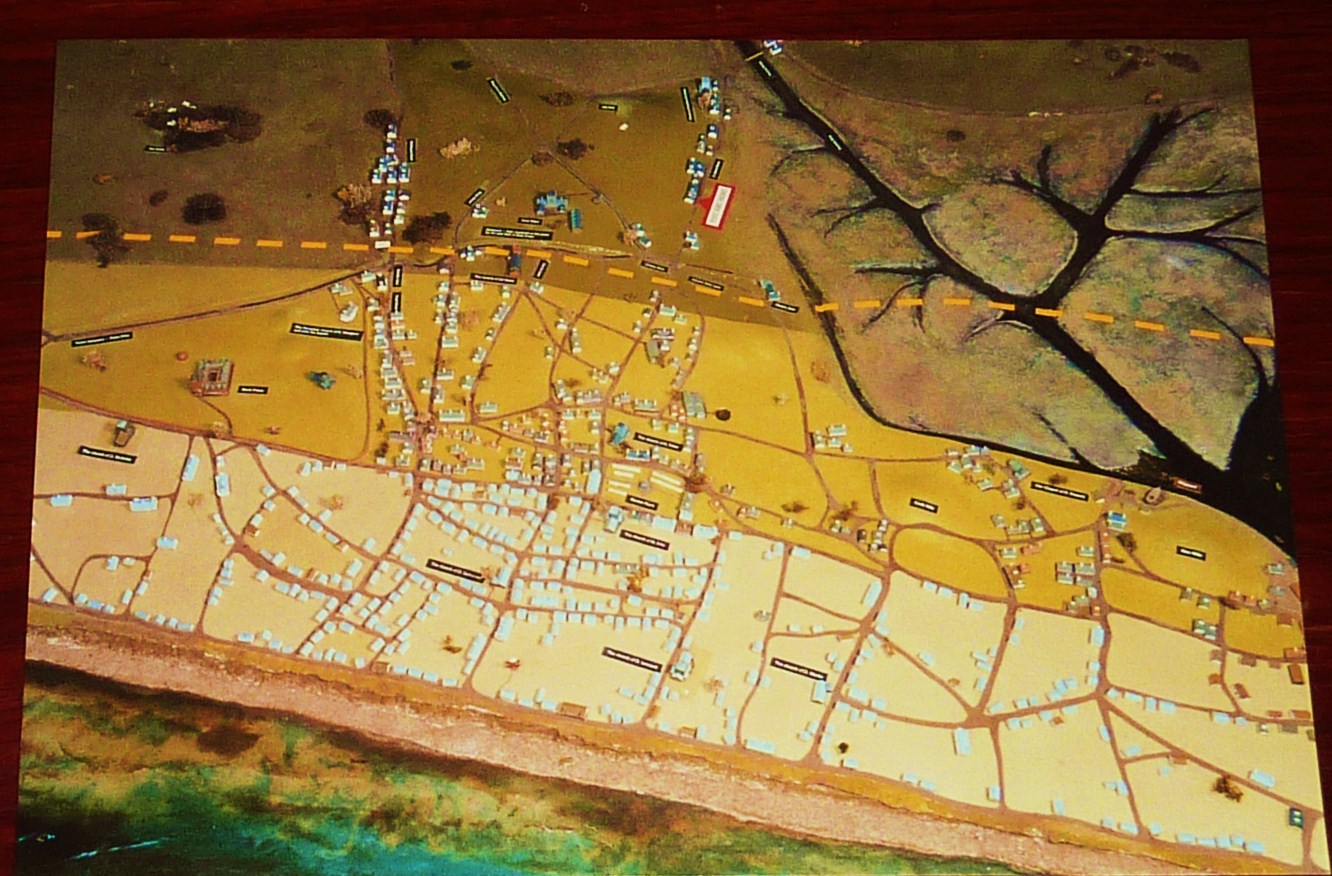
After having a great time with the House in the Clouds and Thorpeness I fitted in a visit to Dunwich, a village which has been mostly reclaimed by the sea; it’s a fascinating story and well worth a look at the historical maps. This is a photo of a postcard I bought at the Dunwich Museum showing the town as it was in the 12th century. The yellow dotted line shows the coastline today.

Dunwich has gradually been reclaimed by the sea.
The yellow dotted line shows the coastline in 2000.
All the land below it has been lost!

Dunwich was subjected to a double whammy of natural forces which added up to a catastrophe for its inhabitants. On the one hand the silting up of the river-mouths of the Dunwich River and the Blythe River led to the loss of the harbour and its associated income from fishing. Then, as if that weren’t enough, savage storms and shifting currents ravaged the coastline to such an extent that by 1602 only a quarter of the town still survived. The inundation has continued unabated and on November 12th 1919 the last remaining tower of All Saints church toppled into the sea.

At www.dunwich.org.uk/history  there’s a fascinating series of illustrations documenting the demise of the church as it slowly surrenders to the sea.

It’s hard to judge if the history of Dunwich is any more interesting than that of other towns in East Anglia but, for me, the plethora of information available, including recent scientific investigations, makes it a town worth the effort of delving into its history.

For more information go to the site above and click on Reconstruction. This shows the town as it was believed to be in 1250 (or thereabouts). Check out Archaeology as well to see the present estimation of the position of the coastline in the year 1050. Riveting stuff if, like me, you’re into that sort of thing!

Posted in England, Suffolk, Travel | Tagged , , , | 2 Comments

Weekly Photo Challenge: Renewal

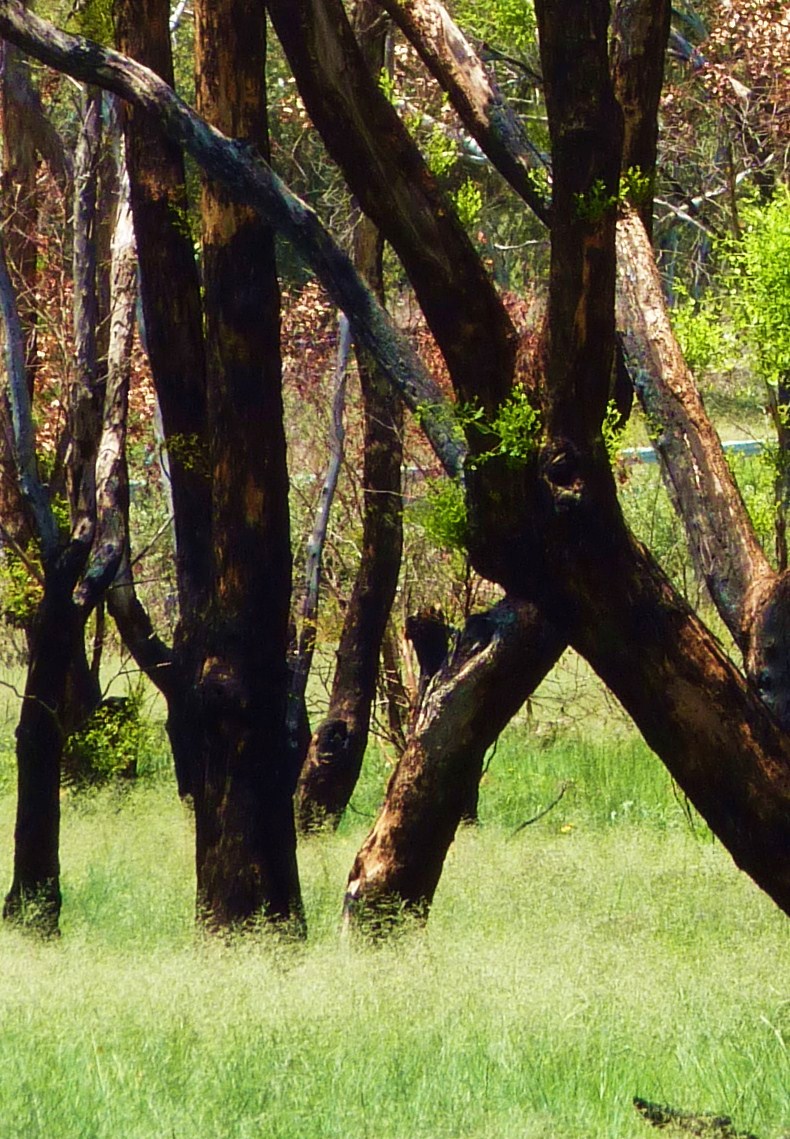
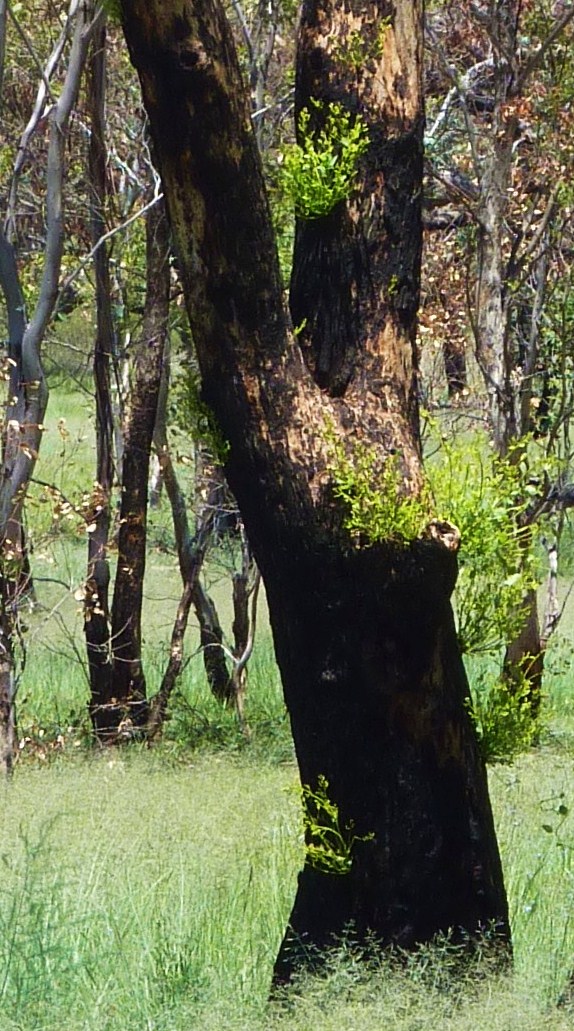
New shoots on a burnt tree near Ballandean, Queensland

The Weekly Photo Challenge: Renewal had me stumped. I was driving home today from a visit to a friend in New South Wales wracking my brain for ideas on the subject. I had more or less decided that I might have to renege on my ‘post a photo once a week’ promise when I came round a bend in the road and dead ahead stood a burnt out patch of trees – black with brilliant green new shoots everywhere. It was just before Ballandean on the New England Highway.

‘Renewal!’   I yelled to nobody in particular, did a U-ie and went back to get some photos.  I’ve included a few more below. Hope you like ’em! (Haven’t tried to master the new format yet – maybe next time)

Renewal in the Queensland bush near Ballandean

Posted in bushfire, driving, Queensland, Weekly Photo Challenge | Tagged , , , , , , , , | 8 Comments

Weekly Photo Challenge: Geometry.

How’s that for geometry!!

The Millennium Dome in the background has 12 supports (one for each month of the year) on its roof  and to my mind they look like small cranes. I photographed it from Greenwich Observatory and thought it was quite a blot on the landscape. It has had its ups and lots of downs – but has experienced a re-incarnation in the last few years. It is now used as a venue for big musical events, some olympic events were staged there, the up-coming ATP World Tour Finals (Tennis) start tomorrow and earlier this year they introduced climbing on the roof.

The Greenwich Power Station is to the left (one of the four chimneys) and it is still in service despite being over a hundred years old. You can find fascinating info about it if you click on this Port Cities link or the Wikipedia link (very similar info but has a lovely photo – click on it to enlarge it).

Here’s my version of that same photo

The O2 (Millennium Dome) and Greenwich Power Station, London

The delightful Meridian Primary School is in the far left foreground. Click on the photo to enlarge it if you want a better view of the school.

Posted in England, Greenwich Power Station, London, London O2, Millenium Dome, Weekly Photo Challenge | Tagged , , , , , , , , , | 7 Comments

25. Thorpeness – do I have a holiday cottage for you?!

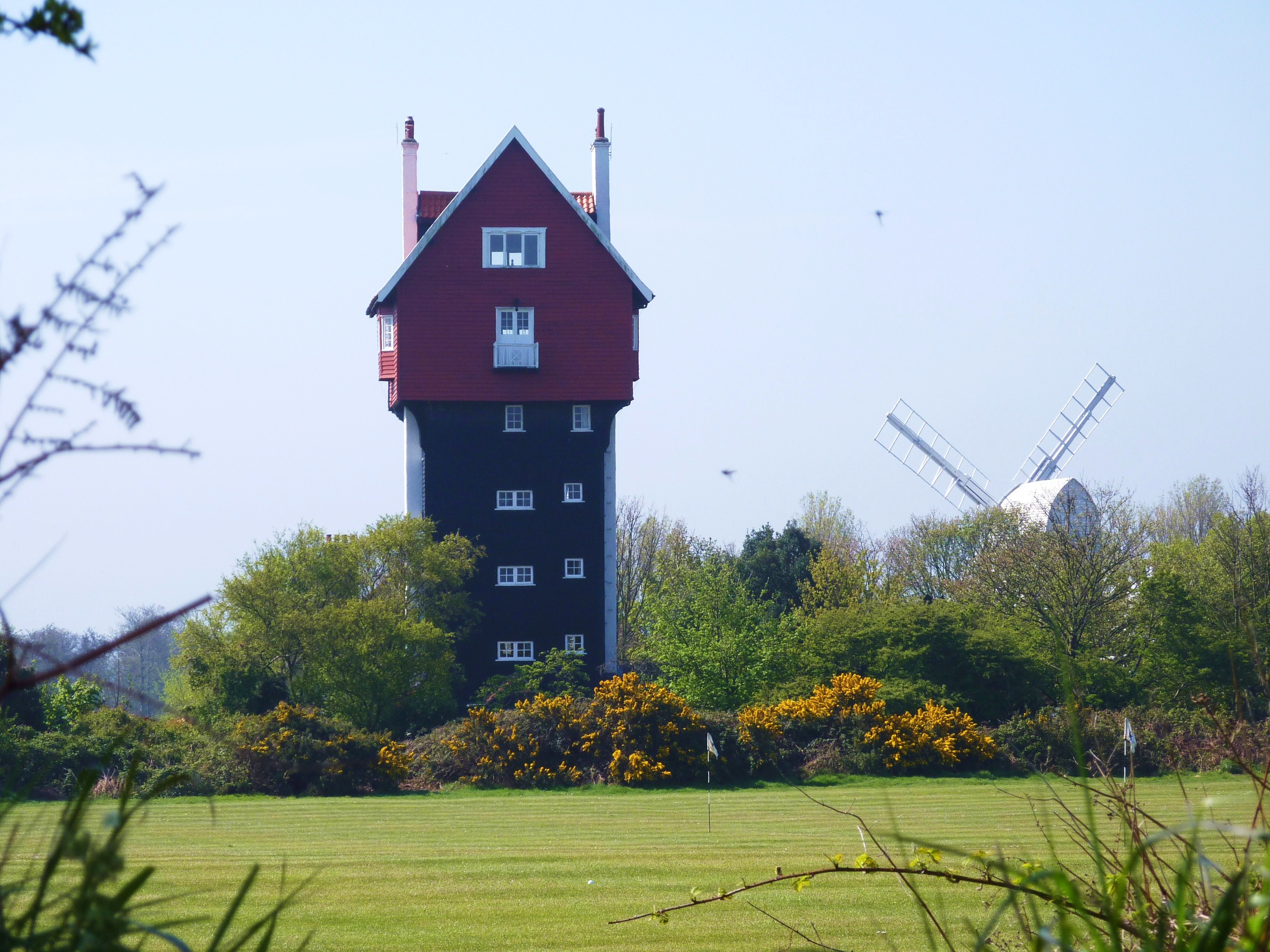
House in the Clouds, Thorpeness, England

Although there are plenty of run-of-the-mill cottages for you to rent in Thorpeness the House in the Clouds is quite eye-catching  and novel from my point of view.  I couldn’t stop photographing it. Strangely enough, because of its position, it’s a devil of a thing to photograph well; you have to risk life and limb to get a decent shot of it at least if you want to photograph it with the wonderful green of the fairway in the foreground.

The local sports club, Thorpeness, Suffolk

I parked in the grounds of the local sports club – and you can see how gorgeous the weather was,  not to mention their clubhouse in the distance……….

Imagine! A thatched roof on your clubhouse!

……..said clubhouse sporting an eye-catching thatched roof – then narrowly avoided being skittled a few times as I scuttled along the ‘footpath’ which measured all of 30 cm (1 ft) in width. No doubt to deter pedestrians, the perilously narrow ‘footpath’ was thoughtfully planted with spiky bushes which served their purpose admirably by inflicting wounds of varying degrees of severity upon my person especially when I had to crouch down and push the camera through the fence and associated undergrowth.

My actions prompted much bad language from myself and the road users as we struggled to avoid a collision as I frequently shied away from a particularly thorny section of shrub. As usual  my trouble was that I wanted a shot from every possible angle and I took a few risks to get them……..but at least I have numerous photos to prove it was worth it.

The two ‘flies’ in the next photo are actually parts of the plant – the long graceful filaments which connected them to the plant were too fine to show up in the shot.

House in the Clouds and windmill – overlooking the golf course.

This is a holiday rental property now.

I believe this is a wonderful ‘cottage’ for you to stay in as it overlooks the lake and the coastline – not to mention the menacing Sizewell Power Station in the distance. I must give it a try next time I visit the UK. The House has a unique history and I was fascinated by the details of the original water tower and you can find more information here if you’re interested.

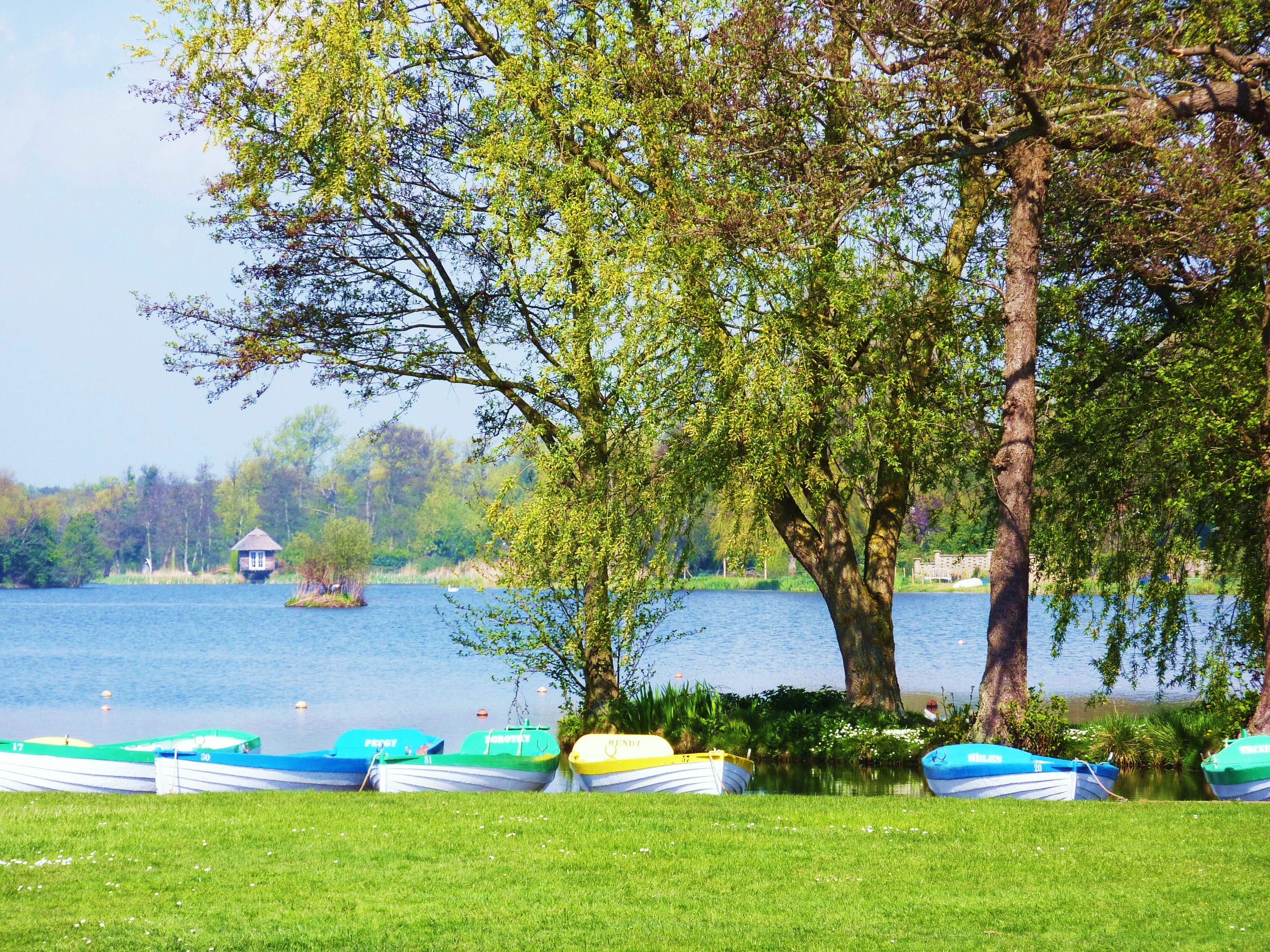
Trying to photograph The House from all possible angles ensured that I paid a visit to this delightful spot – Thorpeness Meare – a manmade boating lake. And, yes, I had to take lots of photos!

House in the Clouds across Thorpeness Meare

Thorpeness Meare, Suffolk, England

Wonderful colours!

Anyone for boating?  Thorpeness Meare

“The Meare is a boating lake like no other. The lake with its islands and surrounds covers some sixty acres and has over forty acres of water. However, nowhere is the lake more than three feet deep and so it provides a very safe boating environment. Dinghies, kayaks, large family rowing boats, canoes, punts and sailing boats are all available for hire” .      A quote from the Visit Suffolk website.

Remember to visit in spring or summer – I was there for the end of April and beginning of May and had wonderful weather ( as the photos demonstrate) – and there are lots of delightful cottages for you to rent along the coast.

Below is a gorgeous photo taken by Geoff Doggett of The House in the Clouds, the windmill and cottages near the Meare at Thorpeness and he has kindly released it to the public domain. To use it go to Public Domain Pictures.net

Thorpeness Meare by Geoff Doggett

Click here to view a great panorama of the Meare and then you can view the other panoramic shots along the beachfront to Aldeburgh by clicking on the left or right arrow. Remember to use the left-to-right scroll bar at the bottom of your screen to see the full width of each photo. Using the left arrow will bring you to a beach shot which includes the Scallop – the memorial to Benjamin Britten – with some interesting details about it below the photo.

Click here to read the about how the small village of Thorpe was developed into today’s Thorpeness by Glencairn Stuart Ogilvie.

Happy clicking!

Posted in Aldeburgh, cottages for you, driving, England, Suffolk, Travel | Tagged , , , , , , , , , , | 19 Comments

Weekly Photo Challenge: Foreign

Beach at Aldeburgh, Suffolk, England

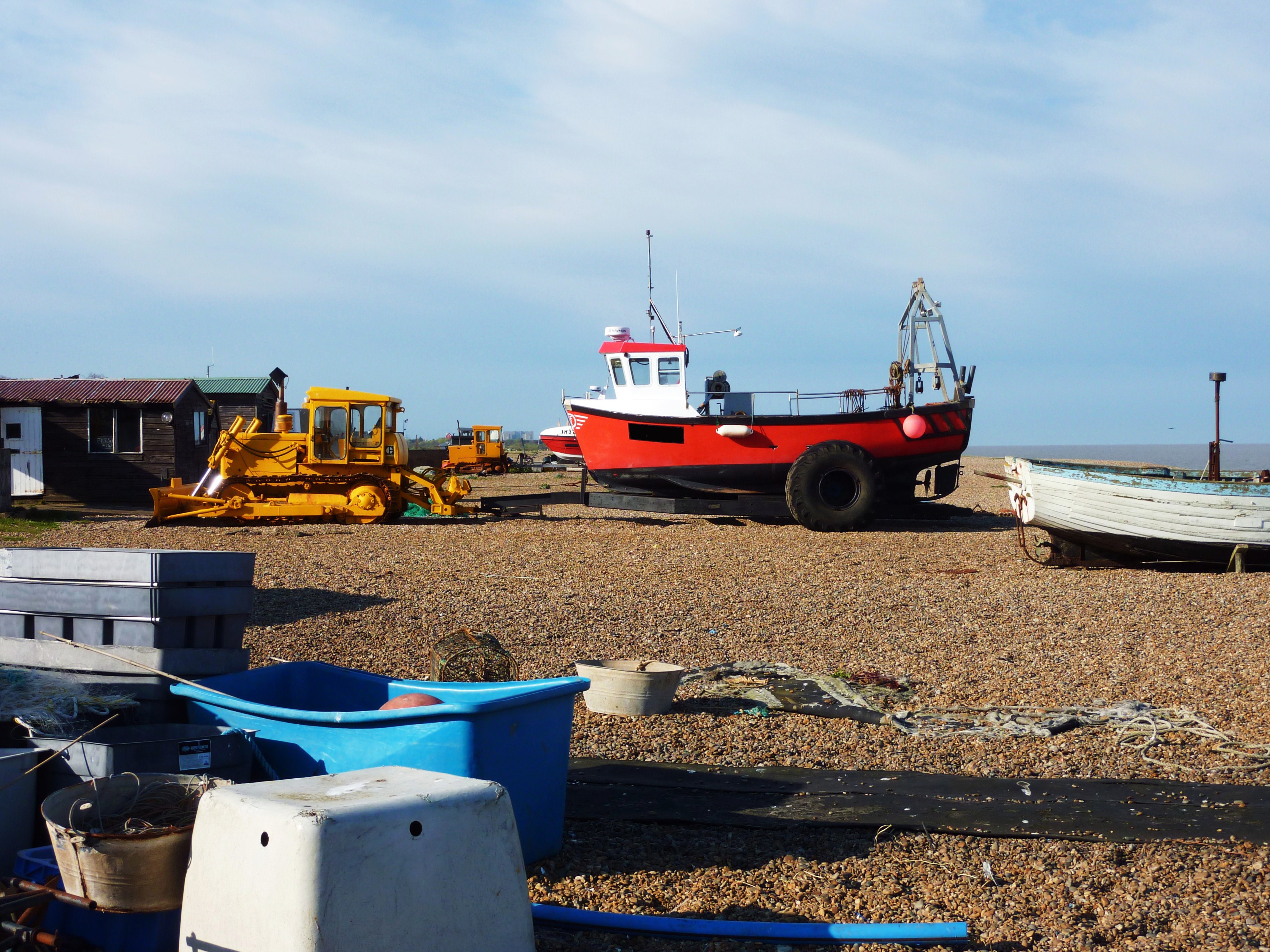
I had fun chosing a picture for this week’s WEEKLY PHOTO CHALLENGE :FOREIGN. I’m not sure how you feel but I am definitely NOT used to seeing THIS on a beach in Australia!    A  very foreign idea indeed!     I love it!!

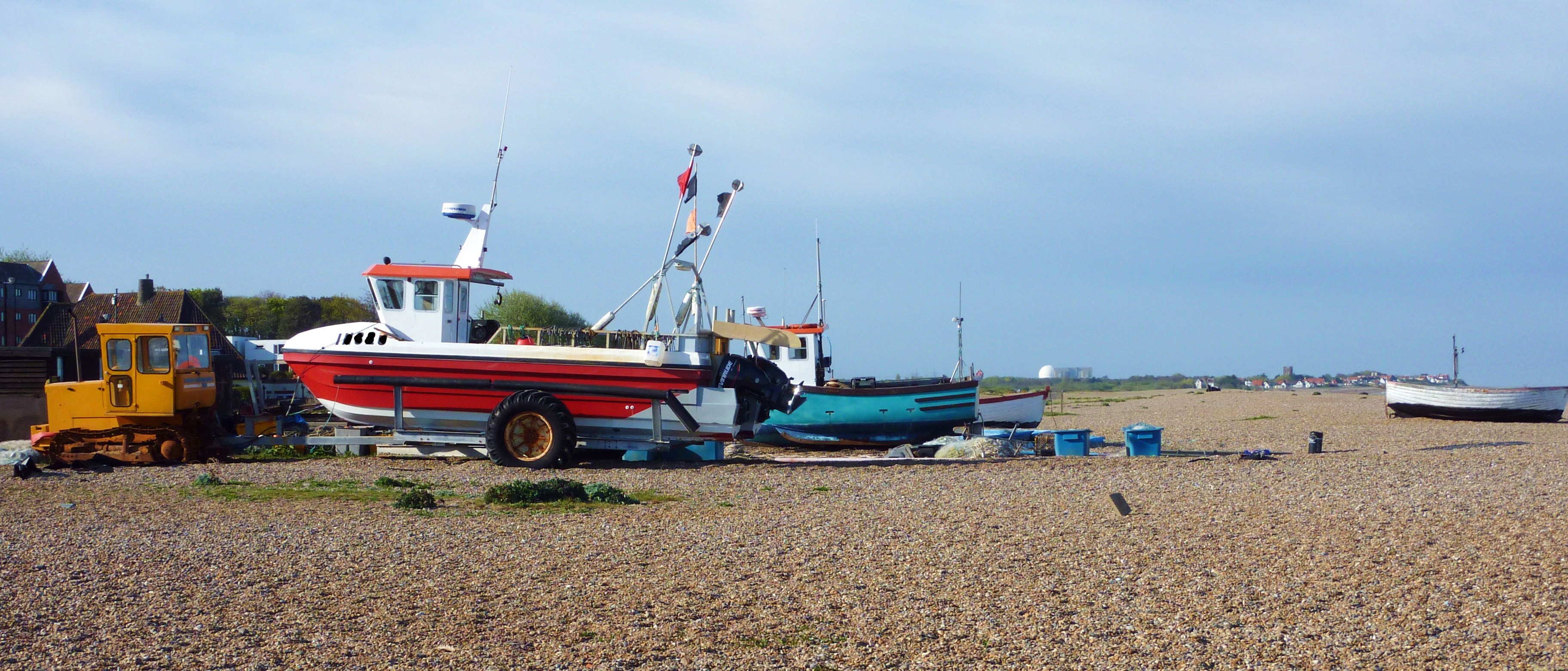
What a wonderful way to adapt to the ‘hard to walk on’ pebbles I mentioned in my post about Amazing Aldeburgh. Obviously they are difficult to drive on as well. The fishermen sell their catch on site and the whole place has the feel of a ‘working beach’ – that is, it feels not like a place for frivolity but like a place for industry – piles of nets on the pebbles, fish boxes strewn around and the boats and caterpillar tractors everywhere.

So very different from the sun, sand and surf idea of a beach here. No hard work required…just play, play,play. I must admit I am happy to indulge in the play side of things – I quite enjoy riding my boogie board in the surf at Mooloolaba.

Anyways, hope you like my idea of ‘foreign’ this week ….. even if it does look like super-sized toys for giants.

Posted in Aldeburgh, England, Suffolk, Travel, Weekly Photo Challenge | Tagged , , , , , , , , , , , | Leave a comment

24. Amazing Aldeburgh!

Knock-off time on the beach at Aldeburgh, England

I guess when you live in this part of the world swimming in the sea is not high on your list of  priorities; nor sitting on the beach for that matter – which is just as well seeing as it consists 100 percent of pebbles. A thick, hard to walk on, layer of pebbles. Not a grain of sand in sight.

First time I’d seen caterpillars on the beach!

The giant’s toys

What was in sight though were their many and varied fishing boats and the tractors which they used to take them to and from the water. I was astonished. The beach looked like a playground for giants with oversized toy boats and tractors everywhere…tons of photos of this lot…yes indeedy. I loved it.

Selling the catch on site.

A working beach

No sunbathers loitering here!

On the beach there’s also a spectacular memorial to one of England’s best-loved sons, the composer Benjamin Britten. It’s spare and sparse as is a lot of Britten’s music and I must say I admired it greatly (something which I cannot say about most of his music). For more information on Britten go to http://en.wikipedia.org/wiki/Benjamin_Britten

The Scallop – Memorial to Benjamin Britten

Britten was one of those responsible for devising the Aldeburgh Festival  and the concerts took place in one of the old malthouses at  nearby Snape.     See Snape Maltings .                     At this point I must recommend Dudley Moore’s performance of his parody  ‘Little Miss Britten’ – a send-up of Peter Pears singing Britten songs. Take a couple of minutes to view it on You Tube – time well spent if you have a sense of humour and some knowledge of the singer and the composer. Little Miss Britten is the first of two songs on this clip, the second being a send-up of the German composer Kurt Weill. I find them both brilliant!.

You could then move on to Dudley’s  ‘Beethoven Sonata’  – his take on how Beethoven might have written a sonata based on the the Colonel Bogey March (most famously used in Bridge on the River Kwai) and his rendition of it about 30 years later on the Terry Wogan show in Britain.

If you have more time to spare follow these up with some of the many and achingly funny skits with Peter Cook  – most in black and white – and all timeless. (Remember to check your data usage if it’s limited)

Now…back to East Anglia.

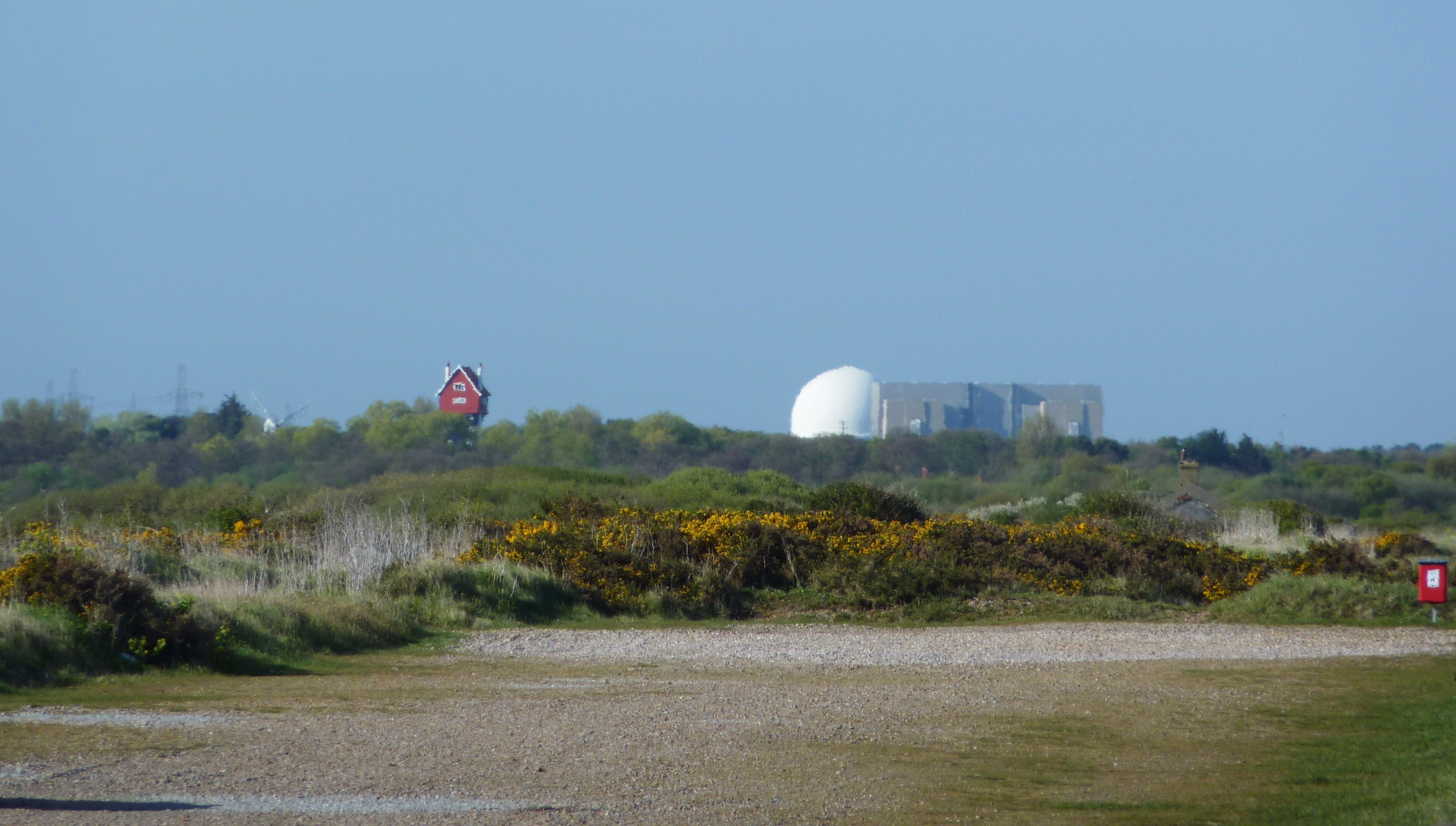
The Sizewell Plant from the beach at Aldeburgh with House-in-the-Clouds on the left

All the while the brooding Sizewell Nuclear Power Station made its presence felt and I was looking forward to a closer look the next day. Even more interesting was the House in the Clouds, now turned into holiday accommodation, but once, with its associated windmill, it was the water tower for the district . I had scoffed at the idea of visiting the place when I saw it in brochures but after seeing the real thing in the distance I couldn’t wait to get up close and personal. But…. I would have to be patient till tomorrow (not something I’m good at!) because now it was time to visit the old original meeting place built in Aldeburgh in the 16th century – the Moot Hall.

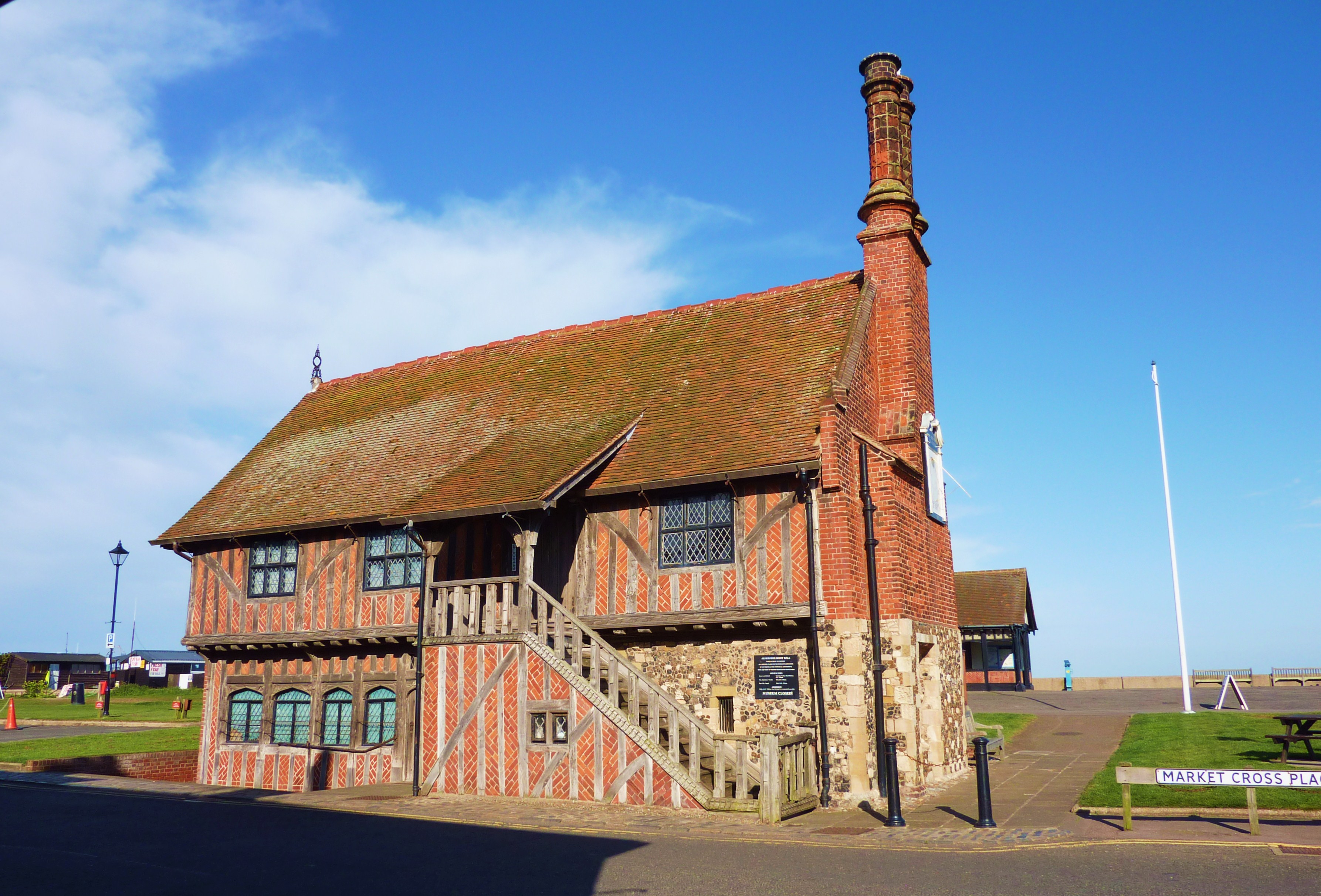
Aldeburgh Moot Hall, Suffolk

Moot Hall Plaque

Aldeburgh’s 16th century Moot Hall is a sight to behold and well worth a visit as it is now a museum. The web site is is of great interest and has some lovely photos of the hall. An important fact to remember about Aldeburgh – if you want to be understood by the natives –  is that it’s pronounced Aldbra; and Rumburgh is similarly Rumbra, with the accent on the first syllable.

Another fascinating tidbit is that Aldeburgh, along with a number of towns along this eastern coast, has left its footprint at the bottom of the North Atlantic. Over the years the sea has gradually encroached on the built-up areas to such an extent that almost half of the town has been inundated. The case of the nearby town of Dunwich is of particular interest but more of that later.

As night fell I said goodbye to Jason and Sue as we were going our separate ways in the morning – they were heading to Heathrow to fly out to join their cruise and I was spending another morning in East Anglia before bracing myself for the drive back to London – something I was dreading.

Delightful B&B at Snape, Suffolk

I drove to Snape to get acquainted with my hosts for the night and a very charming couple of women they were – obviously experienced  at making people feel welcome and at home. The house had a splendid view out the back of rolling hills and grazing sheep and The Maltings I mentioned earlier was not far down the road. I thoroughly enjoyed my stay and, next morning, after a wonderful breakfast I headed back to Aldeburgh and Thorpeness.

The House in the Clouds is in Thorpeness and it is a wonderful sight but this post is getting rather long, so rather than tire you further I’ll be off now. More soon……..promise!

Posted in Aldeburgh, driving, England, Suffolk, Uncategorized | Tagged , , , , , , , , , , , , , , , | 4 Comments

Weekly Photo Challenge: Big

Now that’s what I call a BIG lambshank!

I was presented with this scrumptious-looking lunch at the Huntingfield Arms in Suffolk, England.

Now I know that only HALF of the carrot, cauliflower and cabbage still had to go on my plate but whichever way you look at it that is one BIG meal……and worse still I wasn’t very hungry. I was rather disappointed that I could only eat a small amount! It was cooked to perfection – the meat needed little coaxing to fall off the bone.

In my opinion, BIG is a relative term and that is one BIG lambshank!

Posted in England, Huntingfield, Suffolk, Travel, Weekly Photo Challenge | Tagged , , , , , , , , , , | 2 Comments

23. A Genuine English Country Pub!

Huntingfield Arms, Suffolk

Next stop is the local pub Jason has in mind for lunch, Huntingfield Arms.

It has a lovely bar and separate restaurant and is a listed building grade II. It was originally the estate manager’s house for nearby Heveningham Hall.

Pubs in England are quite different from a lot of pubs in Australia – I guess the weather has a lot to do with it. A typical country pub in England has a warm, inviting atmosphere and there appears to be no pressure or indeed desire for anyone to become intoxicated. There’s a lot of leisurely chatting and sipping wrapped in a layer of conviviality that is quite foreign to the average Aussie pub. And Aussie pubs smell. They smell of stale beer with a hint of urine and a soupçon of vomit for good measure. This pungent mix simmers in the midday heat and causes passers-by to almost faint from the stench……unless they are drinkers – in which case they don’t seem to notice.

Amazing! How can they not notice? I guess it’s similar to smokers who have a quickie in the loo then try to look all innocent when they come out. They’re the only ones completely oblivious to the cloud of cigarette smoke that surrounds them and the cigarette breath they’re breathing over all and sundry. What?  Me?  Smoke?  Never!

The bar – Huntingfield Arms

Anyway…back to English pubs… and in particular the Huntingfield Arms. It appears that, especially in the middle of the day, NO-ONE is there to get drunk.

The meal was very good – lamb shanks and veg – but of course I’d had so much food in the past 24 hours that I looked with horror on the gigantic plateful they’d just given me.

My gigantic lambshank lunch!

Jason and Sue had eaten a meagre breakfast in their van while I had tucked into cereal, bacon, eggs, sausage, tomato,toast, jam and numerous cups of tea at my B&B and the thought of food was nauseating. I bravely ate a few mouthfuls and moved the food round the plate from time to time but, in truth, ate very little. Jason, fortunately, has hollow legs so he was happy to polish off the rest of my lunch.

The afternoon was spent happily wending our way through the tiny villages of East Anglia and I was struck, yet again, by how time-consuming it is to see all that there is to be seen in England. Around every corner there’s a new surprise, a wonderful story to be told whereas back home you can drive through mile after mile of never-ending sameness and discover little about its history.

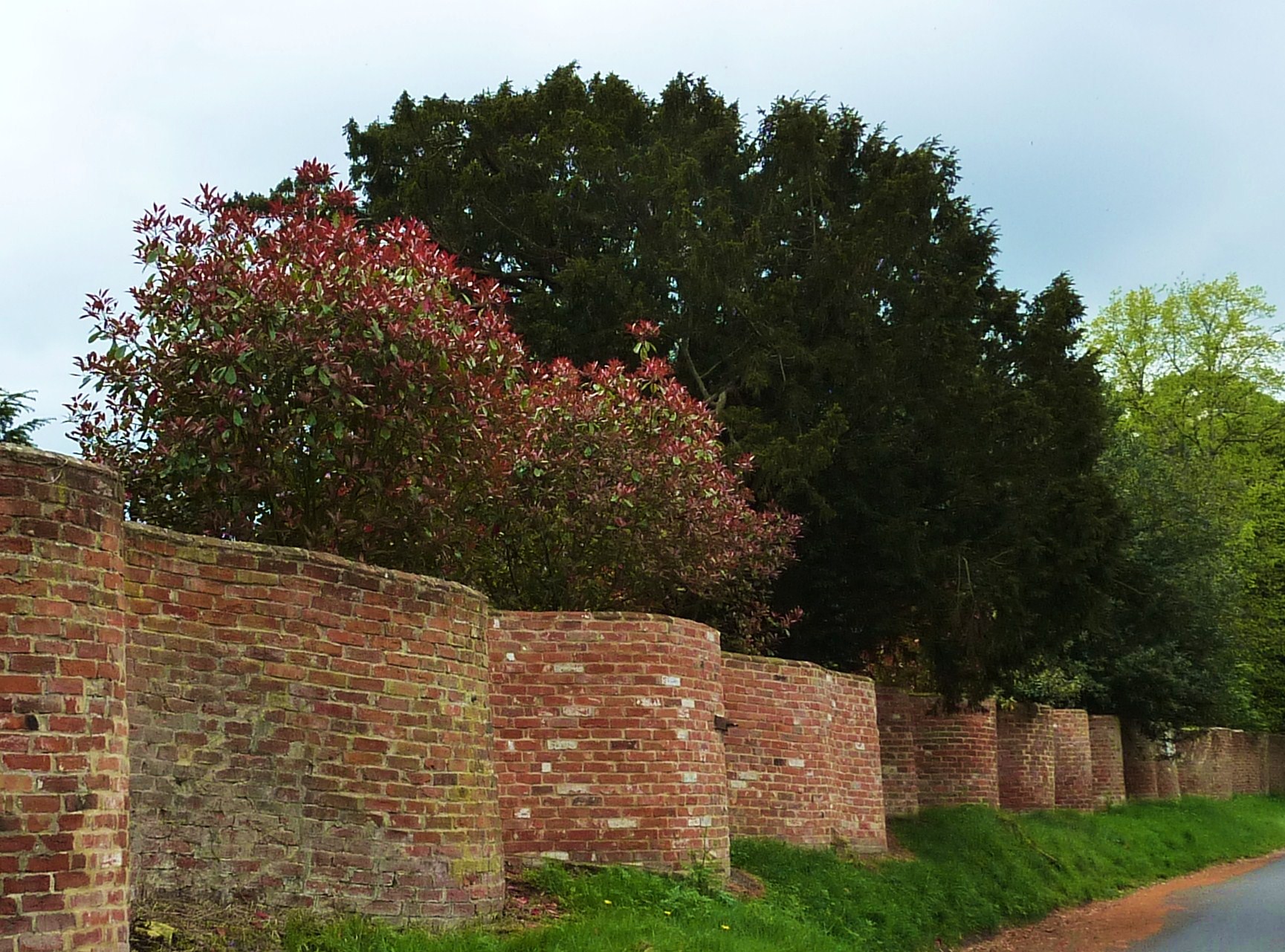
Suffolk’s crinkle crankle walls

We drove back through Bramfield and I photographed the crinkle crankle walls on our way to Aldeburgh where Jason and Sue were to spend the night near the yacht club.

The curves are not exactly uniform in this example!

I found the crinkle crankle walls  quite attractive – they snake their way along for great distances. Apparently the Dutch brought the idea over with them when they came to drain the fens. The walls can be just one brick thick and cover long distances without the need for bracing as long as they incorporate the semi-circular curves along their entire length.

As the afternoon wore on I decided I had to take some steps to find a room for the night. Sue and I found some B&B ads in a shop window and on phoning one of them in the next village, Snape, I found there was a vacancy.

Having booked another B&B I could relax again and we set out for the ‘beach’ at Aldeburgh to have a look-see. When we arrived, in the spirit of being a genuinely flexible visitor, I had to dramatically alter my definition of ‘beach’ …….. but more of that later!

Posted in driving, Huntingfield, Suffolk, Travel, Uncategorized | Tagged , , , , , , | 9 Comments

22. A delightful morning in Huntingfield

Peach blossoms near Halesworth

It was such a great time of year to be travelling in England – blossoms everywhere. I was sorry to leave the guest house but at 10am Sue and Jason arrived in the campervan and we headed into the centre of Halesworth to fill up with petrol and then take a walk through the delightful village.

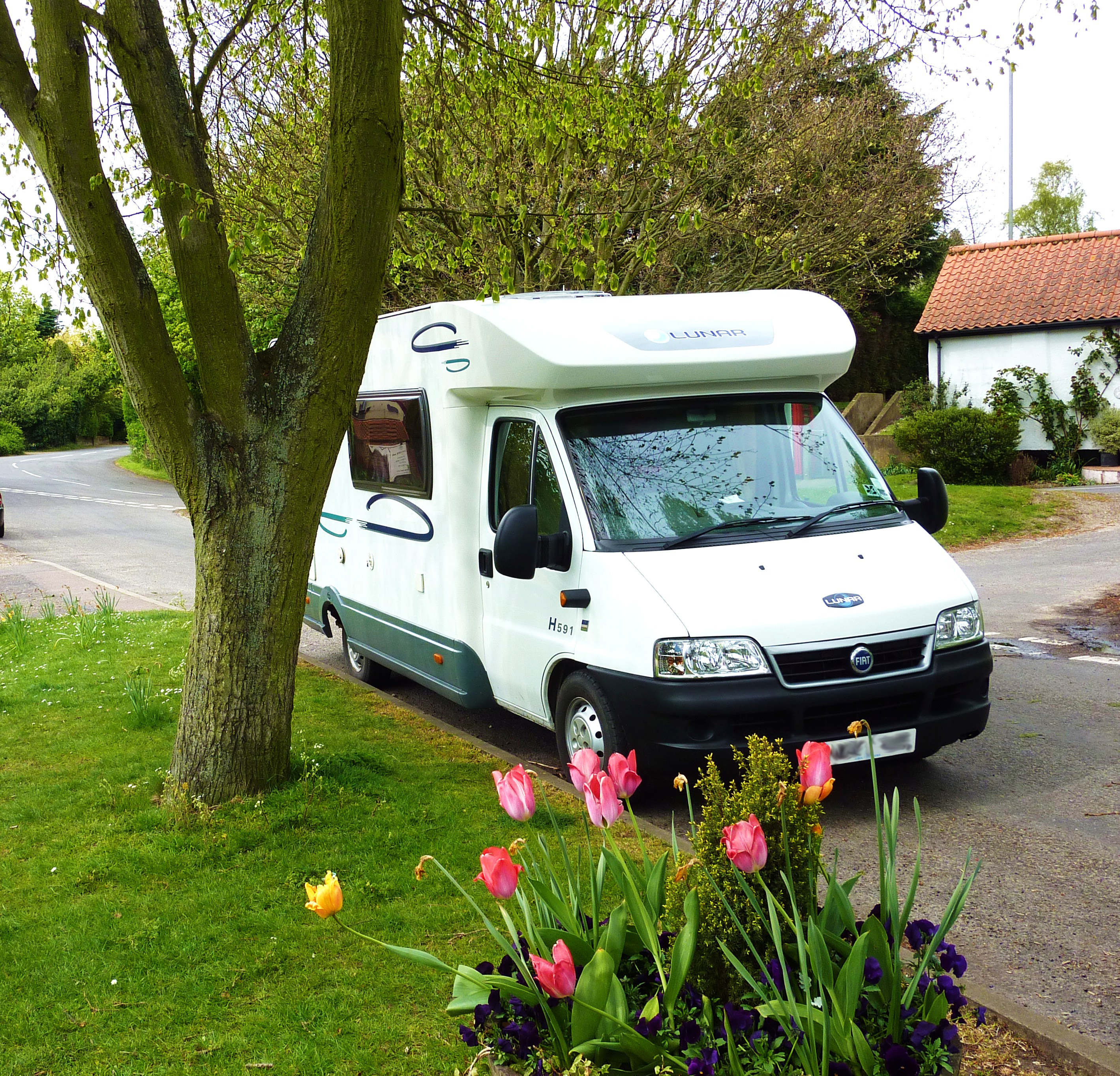
Jason and Sue’s campervan in Halesworth

I wanted to buy some postcards, which was easy enough, but in England, finding the Post Office can prove a little tricky. It takes a bit of getting used to and was something I’d forgotten about since leaving 21 years ago.

The Post Office will be situated at the very back of a newsagent or hardware store or any other store that takes its fancy. The locals think you’re quite mad when you express surprise at this arrangement – they’ve lived with it all their lives so what’s the problem? It just takes a little getting used to, that’s all.

Having bought my stamps at the back of the hardware store I found somewhere to sit and write on my postcards. After that, while Jason and Sue were about their business I used the new phone I’d bought to call my son in Australia. How lovely to chat with him while sitting in such a wonderful village. There was a bit of an uproar as I sat and chatted to him as a CAR (the cheek of it !) appeared on the scene and laboriously nosed its way through the affronted pedestrians. The occupants must have felt their ears burning as the mutterings of the locals followed them down the street.

I then made a quick call to my sister back home to prove to her that it hadn’t been a waste of money (which she believed it was – a whole £15 worth) but, rather,  had been a jolly good idea to buy a new phone. The phone was invaluable during the entire trip as the places I stayed in were without phones for overseas use.

Church of St Mary the Virgin, Huntingfield, Suffolk

We had a delightful drive through the countryside, inspecting the local church at Huntingfield and snapping photos of blossoms as we went.

Rapeseed in bloom, Suffolk

The local church is St Mary’s – its full title is the Church of St Mary the Virgin – and it is a truly wonderful building. Its grade one listed, no less, and was built in the 11th century.        I managed to capture the details of the beautiful stained-glass window and the floor – someone was looking over me that day!

St Mary’s, Huntingfield

St Mary’s, Huntingfield

Beautiful floor, St Mary’s

Its listing is due mainly to the astonishing ceiling, the painting of which was done by Mrs Mildred Holland, wife of a former rector. The story is a most unusual one and some people have seen fit to belittle her efforts. Granted she’s no Botticelli or Michelangelo but I take my hat off to her (or would do if I wore one).

Good on her, I say. I thought she did a grand job!

Ceiling, St Mary’s, Huntingfield

Not for Mildred the endless rounds of tea, scones and idle chatter; no easy way out for her. In 1859 she began designing and planning the ceiling decoration and then proceeded to paint it herself, finally finishing it in 1866 (although some sources say it took her 23 years to complete).  I’m sure her work would be treated with more respect if                                                                                                                                                      (a)          she had a foreign name,     or                                                                                      (b)          she’d been a man

Mildred’s handiwork, St Mary’s

To those who criticize her I make this suggestion. You get up there with 19th century equipment, with paint dripping on your face in an airless environment not to mention annoying parishioners noisily praying down below and see how you fare.

‘Nough said.

These two links provide differing opinions on Mildred’s work and some fascinating background information. ( the second link is in 2 parts – too wide for page. Clicking on either section will work)

http://www.britainexpress.com/attractions.htm?attraction=4929

http://www.bbc.co.uk/suffolk/content/articles/2007/01/15/divine_art_

 huntingfield_church_feature.shtml

This final link is to a wonderful photo of the entire interior of St Mary’s taken by  AlanandJill  who obviously have far more skill and a much better camera than I do . Enjoy!

http://www.flickr.com/photos/35027610@N05/4481094437/in/photostream/

Posted in driving, England, Huntingfield, Mildred Holland, St Mary's Church, Suffolk, Travel, Uncategorized | Tagged , , , , , , , , , , , | 7 Comments